Why most businesses fail before they start and the one-hour framework that changes everything
Ask 100 entrepreneurs how to generate revenue, and most will hesitate. Not because the answer is complicated, but because somewhere between the business plan and the first invoice, they forgot the most fundamental truth: revenue is the result of solving a problem someone is willing to pay for.
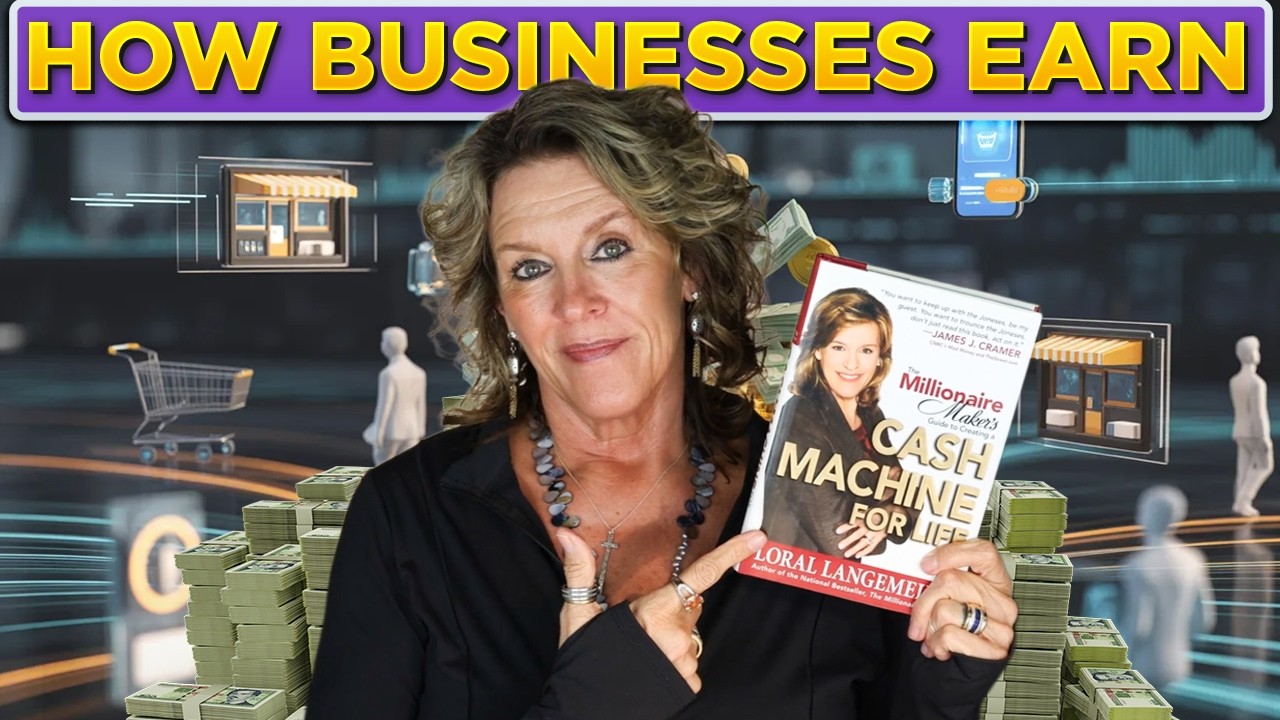
The bigger the problem, the bigger the revenue. Simple in theory. Brutally difficult in practice. That’s why financial educator and best-selling author Loral Langemeier, in her YouTube video “How Does a Business Generate Revenue,” breaks it down into a system she says can take anyone from zero to cash in under an hour.
The Four Levers of Business Revenue
Before you can build a revenue system, you need to understand where revenue actually comes from. Langemeier identifies four fundamental sources, all of which can be accelerated at different stages of business growth:
- New customers — expanding your reach to people who’ve never bought from you before
- Recurring revenue — monetizing existing customers through continuity and repeat purchases
- More products or services — expanding your offer stack to serve more needs of the same audience
- Higher prices — increasing perceived value and capturing more margin per transaction
Most businesses focus on only one or two of these. The real multiplier comes when you build systems around all four simultaneously.
The “Adjacent Revenue” Strategy Most Entrepreneurs Miss
One of the most overlooked revenue opportunities isn’t new customers or new products, it’s the money sitting right next to what you’re already doing.
Langemeier calls this the multiple streams approach, and it’s devastatingly simple. If you’re in real estate, why are you paying someone else to do the cleaning, hauling, landscaping, or construction? Why aren’t you the distributor of the windows, appliances, or building materials going into every property you touch?
She makes it concrete with a real example: a French cooking expert who sells recipes, modifies them for dietary restrictions, and distributes the exact appliances needed to make them. One audience. Three revenue streams—no new marketing spend.
Look at what’s adjacent to your core offer and ask who else you could be getting paid to be.
The Offer Is Everything — And Most People Don’t Have One
Here’s the uncomfortable truth that most business content won’t say out loud: the reason most businesses don’t generate revenue isn’t the market, the economy, or the algorithm. It’s the absence of a clear, priced, communicated offer.
Every one of us, nurse, teacher, web designer, copy editor, nutritionist, financial coach, has a marketable skill set. The gap isn’t capability. It’s the failure to package that skill into something someone can actually buy.
Langemeier’s suggestion for anyone who doesn’t know where to start? Survey your audience on social media. Post a question, go live, and ask what people want to learn. Then build the offer around what they tell you. The market will write your offer if you let it.
The fastest path to cash is simpler than you think. You don’t need a website, a funnel, or a brand deck. You need 20 text messages and a clear proposition. Here’s the exercise she gives her clients:
- Define your 20-minute offer. What can you teach, consult on, or demonstrate in a focused 20-minute session? Put a price on it. $20 is a fine place to start.
- Text 20 people you know. Not post, not advertise text. Personal outreach converts far better than broadcasting into the void.
- Follow up within minutes, not days. If someone is looking for a solution and you don’t respond quickly, they move on. The internet never stops offering alternatives.
- Move them into a database. One-off transactions are revenue. Relationships are businesses. Get contact information and build a follow-up sequence.
- For offers over $1,000, pick up the phone. No automation closes high-ticket like a real conversation.
The Three Revenue Mistakes Killing Businesses Before They Start
- No offer defined. They know their skill but can’t articulate what someone is actually buying, at what price, for what outcome. Undefined offers don’t sell.
- No price attached. Price communicates confidence and respect for your own expertise. Without one, even great skills go unbought.
- Slow follow-up. Someone expressed interest. Days passed. Now they’ve solved the problem elsewhere or convinced themselves they didn’t need it. Revenue isn’t made at the pitch; it’s made in the follow-through.
Selling Is Serving — Not Convincing
The most important mindset shift Langemeier offers is reframing what sales actually is. Many of us were taught manipulative, pressure-based models that feel wrong, so we avoid selling altogether—the result: great skills, no revenue.
Her alternative is a simple framework she calls ask-tell-ask:
- Ask what problem they’re trying to solve.
- Tell them why you’re the right solution.
- Ask for the business.
When you approach a conversation as genuinely trying to solve someone’s problem, not close a deal, the dynamic shifts entirely. The language changes, the pressure drops, and conversions go up.
And don’t overlook the infrastructure: good bookkeeping and accounting systems aren’t optional. Most business owners mismanage cash flow by paying bills in the order they arrive rather than strategically. Understanding your numbers is the difference between a cash machine and a cash drain.
The Revenue System, Summarized
Sustainable income isn’t an event; it’s a system. Here’s the full framework distilled:
- Identify the problem you solve and who has it
- Create a clear, priced offer around your existing skills
- Reach out personally and directly, don’t wait for them to find you
- Follow up immediately and build an automated sequence for scale
- Move buyers into a database and nurture the relationship
- Add adjacent revenue streams to what you’re already doing
- Track your numbers and understand your cash flow
The Bottom Line
Revenue generation isn’t a mystery. It’s a muscle. And like any muscle, it atrophies when you avoid using it, which is exactly what happens when entrepreneurs spend months perfecting a product with no offer attached to it.
The good news? You don’t need to start big. You need to start. A 20-minute consultation, 20 text messages, and a $20 price tag are enough to prove the model. Scale comes after proof, not before.