In today’s real estate market, talent and hustle are no longer enough.
You can be smart.
You can be driven.
You can even be profitable.
But without structure, protection, and the right strategic circle, your growth will eventually hit a ceiling.
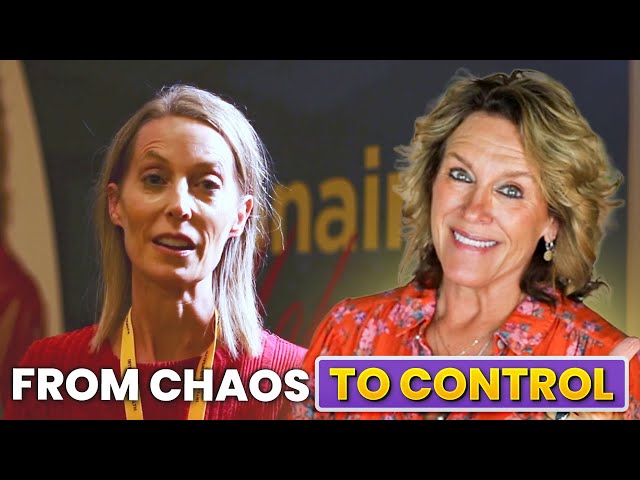
Valerie Kirsty’s journey as a real estate investor and developer in Richmond, Missouri, offers a powerful case study for entrepreneurs who are building quickly but sense that something foundational is missing.
Her story isn’t just about scaling property.
It’s about transitioning from operating in isolation to building with structure, safety, and long-term vision.
And that shift changes everything.
From Self-Taught Hustler to Community-Driven Builder
Valerie started, like many investors, self-taught and resourceful.
She began with farmland investing and gradually expanded into:
- Rehabbing properties
- Developing long-term rentals
- Creating midterm rentals
- Launching luxury short stays
Her projects weren’t just profitable. They filled gaps in her small-town market and helped beautify the community.
That’s entrepreneurial impact at its best:
- Identifying unmet demand
- Creating local value
- Building assets that appreciate
But despite her success, she recognized a deeper issue.
She had built momentum but not infrastructure.
The Hidden Risk of Growing Alone
Valerie described operating “as an island.”
Although she and her husband worked together, she ran the company while he maintained a full-time job. Many founders know this dynamic well:
- One partner carries operational responsibility
- Decisions are made reactively
- Strategy evolves without a formal structure
And eventually, a realization surfaces:
“I knew there were more options available… and I was missing certain foundational pieces.”
This is where many entrepreneurs stall.
They’re making money.
They’re adding properties.
They’re scaling revenue.
But they lack:
- Legal structuring clarity
- Tax optimization strategies
- Risk mitigation systems
- Succession or legacy planning
- Strategic advisory relationships
Growth without foundation is fragile growth.
The Inflection Point: Entering a Bigger Circle
Valerie discovered new mentorship and community through online content, something increasingly common in today’s digital learning economy.
But what’s important isn’t how she found it.
It’s what she recognized:
To grow beyond her current level, she needed proximity to people operating at a higher level.
This aligns with what we see repeatedly across high-growth industries:
- Top performers invest in masterminds
- Founders join peer advisory groups
- Real estate operators build strategic alliances
- CEOs hire outside strategic advisors
Why?
Because scaling requires exposure to new thinking.
You cannot architect a level 10 business with level 4 infrastructure.
What “Structure” Really Means in Real Estate
In Valerie’s case, joining a structured entrepreneurial community gave her:
- Foundational legal and business restructuring
- Personal asset protection awareness
- Long-term legacy strategy insight
- Exposure to new business launch opportunities
- Access to high-caliber peer relationships
Let’s break this down through a strategic lens.
1. Structural Safety
For real estate investors, this includes:
- Proper entity setup
- Liability segmentation
- Asset protection layering
- Contract standardization
- Insurance optimization
Without these, a single lawsuit, tenant issue, or economic downturn can destabilize years of work.
2. Financial & Tax Efficiency
Many investors focus on acquisition but overlook:
- Entity tax election strategy
- Payroll structuring
- Depreciation leverage
- Estate transfer efficiency
- Multi-entity cash flow routing
Scaling isn’t just about revenue growth.
It’s about profit retention and wealth preservation.
3. Legacy & Long-Term Planning
Valerie referenced restructuring her personal and business life for:
- Safety
- Security
- Legacy growth
This is where mature entrepreneurship begins.
Legacy growth in real estate might involve:
- Intergenerational transfer planning
- Trust structures
- Holding company architecture
- Strategic reinvestment models
- Exit pathway clarity
Most investors focus on the next deal.
Elite operators focus on the next generation.
The Power of High-Caliber Community
One of Valerie’s strongest takeaways wasn’t tactical.
It was relational.
She emphasized:
- High-quality people
- Willingness to share
- Access to new contacts
- Opportunities that wouldn’t have existed otherwise
This mirrors what research consistently shows about entrepreneurial ecosystems:
- Peer groups increase revenue growth rates
- Strategic community reduces decision fatigue
- Proximity to experienced operators shortens learning curves
- Network access accelerates deal flow
In real estate specifically, community unlocks:
- Private capital introductions
- Off-market opportunities
- Joint venture partnerships
- Lender relationships
- Vendor efficiencies
The ROI of the right room is exponential.
Scaling With Stability: The Competitive Advantage
Valerie has been in this new environment for less than a year.
In that time, she has:
- Reorganized her business framework
- Built new strategic relationships
- Strengthened foundational protection
- Positioned herself for new launches
This is what scalable entrepreneurship looks like.
Not chaotic expansion.
Not opportunistic scrambling.
But intentional growth layered on protected infrastructure.
Why This Matters for LinkedIn Professionals
Whether you’re in:
- Real estate development
- Private equity
- Entrepreneurship
- Consulting
- Wealth advisory
- Corporate leadership
There’s a universal principle here:
Isolation limits scale. Structure unlocks it.
In a market defined by volatility, interest rate swings, regulatory changes, insurance cost increases, and shifting rental demand, operating without foundational protection is a liability.
The operators who thrive in the next decade will be those who:
- Formalize systems
- Diversify advisory input
- Build strategic circles
- Prioritize asset protection
- Plan for legacy, not just liquidity
Strategic Reflection: Are You Building a Business or a System?
Valerie’s story prompts important questions for any growth-focused professional:
- Are you structured for scale or just surviving momentum?
- If something went wrong tomorrow, is your asset base protected?
- Do you have a strategic advisory circle?
- Are you planning for generational continuity?
- Are you optimizing your tax and legal frameworks?
- Is your growth intentional or reactive?
Most entrepreneurs upgrade their marketing first.
Elite entrepreneurs upgrade their structure first.
A Practical Framework for Founders
If you’re building or scaling, consider auditing your business in these five areas:
1. Legal Structure
- Are your entities optimized?
- Is liability segmented appropriately?
2. Financial Strategy
- Are you minimizing tax inefficiency?
- Are cash flows routed intentionally?
3. Risk Mitigation
- Insurance?
- Contracts?
- Operational safeguards?
4. Strategic Relationships
- Do you have mentors?
- Do you belong to a high-level peer group?
- Do you have access to advanced operators?
5. Legacy & Exit Planning
- What happens in 10–20 years?
- Is your wealth transferable without erosion?
The Modern Real Estate Developer’s Evolution
The industry has evolved.
Today’s real estate leader isn’t just:
- A deal maker
- A renovator
- A landlord
They are:
- A strategist
- A systems architect
- A risk manager
- A wealth planner
- A community builder
Valerie’s journey demonstrates this evolution in action.
She didn’t change her ambition.
She upgraded her foundation.
Final Thought: Growth Is Easy. Protected Growth Is Mastery.
Many entrepreneurs can grow.
Few can scale safely.
Even fewer can scale safely while building legacy.
Valerie’s story reminds us that the most important pivot isn’t always a new property acquisition.
Sometimes it’s entering a room where you’re no longer the most advanced operator and allowing your framework to evolve.
If you’re building in real estate or any scalable business, I’d love to hear your perspective:
- What was the biggest structural shift that changed your growth trajectory?
- Have you ever felt like you were scaling without a foundation?
- What role has strategic community played in your success?