I get asked this question constantly. Why does someone earning $150,000 or $200,000 a year still feel broke by the third week of the month?
It is not because they earn too little. Plenty of middle-class households pull in real money. The problem is how they earn it, and what they do with it once it lands in the account.
I see the same three patterns over and over. They overpay tax at the highest rate. They park their money and pray. And they stay committed to the commute instead of building something that pays them differently. Fix those three things and the entire trajectory of your financial life changes.
Why the Middle Class Gets Taxed the Hardest
When politicians talk about “taxing the rich,” they mean high-income employees. They are not talking about entrepreneurs making money inside a C corp, an S corp, an LLC, or a limited partnership. Companies get the best tax strategies available. Individuals get the worst.
That is the whole game. An employee makes money, pays taxes on it, and spends what is left. A business owner makes money, spends through the entity and takes every deduction the tax code allows, and only then pays tax on what remains. Same income. Completely different outcome.
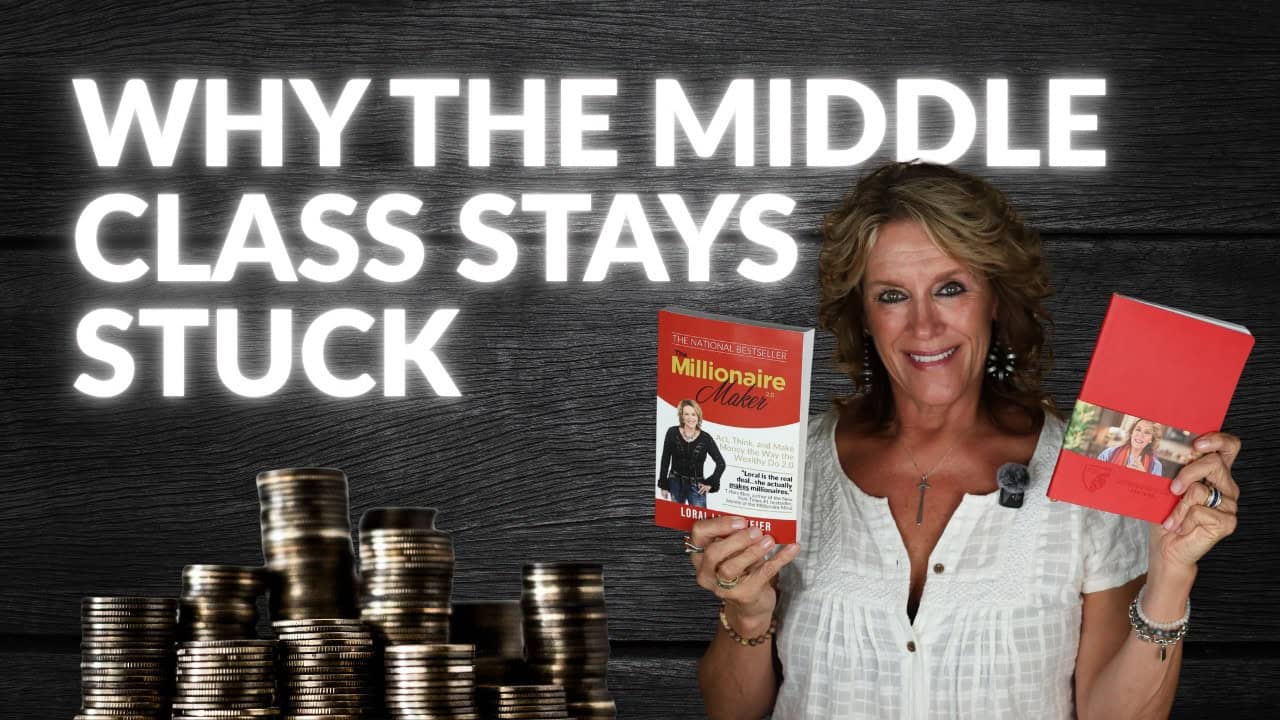
In The Millionaire Maker, I lay out a P&L and a balance sheet stacked differently than what you learned in school. Income sits over assets. Expenses sit over liabilities. That stack shows you exactly where the leak is. Most people spend their whole career trying to pay off liabilities instead of using those same expenses as legitimate business deductions. That is the difference between a category of spending being taxable or not. It really is that simple.
“Companies get the best tax strategies. Individuals get the worst.”
Start today: Ask whether your income is currently running through an entity or straight to your personal tax return. If it is the second one, that is the first thing to fix.
Why “Park and Pray” Isn’t a Financial Plan
Most middle-class earners are too busy working to learn how to invest. So they hand their money to a financial planner and pray something good happens. Here is the part nobody wants to say out loud. A financial planner at a traditional firm often has less required education than someone licensed to cut hair. You are letting someone making $50,000 or $60,000 a year make decisions about money you may have spent decades building.
Park and pray is not a strategy. It is an excuse to avoid learning.
The Wealth Cycle works differently. You make money and put it directly to work in an asset that produces passive income, and that income feeds the next asset. Compare that to the Lifestyle Cycle: make it, spend it, make it, spend it. One builds; the other treads water.
In The Millionaire Maker’s Guide to Wealth Cycle Investing, I put it plainly: high-income earners don’t park their money and let it sit. They invest it directly in real estate, oil and gas, and businesses they understand.
Start today: Pull out a compounding calculator and run the math on $300 or $500 a month at 10 to 12 percent over the next decade. Compare that number to what your current lifestyle spending has actually produced.
The Cost of Staying Committed to the Commute
Rick Nunan is a real story from The Millionaire Maker, name changed to protect his privacy. He was a marketing executive outside Seattle with a four-hour daily commute, two hours each way. He had $490,000 sitting in a 401 (k), doing almost nothing.
Here is what changed. Rick moved $270,000 of that money into direct investments, real estate, and gas and oil assets he actually understood, and it started producing $6,400 a month in cash flow. Then he stopped working as a W-2 employee and asked his employer to pay his LLC instead for the same consulting work. That single move took his monthly take-home from around $12,000 to $18,000.
Compare that to someone still commuting four hours a day, on conference calls, working for someone else’s cash machine with no strategy attached. Same skill set. Completely different financial life.
You don’t have to quit your commute tomorrow. But if you want out of the middle class, you have to start asking who is capturing the value of your time, and whether your money is sitting passively while someone else’s is compounding.
“You want passive income, not a passive life.”
Start today: Ask your employer, or your own business, whether income can be routed through an entity instead of a W-2. Then look at whether your retirement account is doing anything or just sitting there.
Stop Buying the Stock Market Only. Own the Asset.
One more habit keeps the middle class stuck. They put everything into the stock market and call that diversification. It is not. It is 100 percent exposure to capital gains and market swings you don’t control.
The wealthy diversify into direct asset classes. Instead of a REIT, they own the real estate. Instead of a gas and oil stock, they own the well. Instead of an airline stock, they invest directly in aviation assets. Those are the investments that affect your depreciation schedule, which affects your taxes, which is the whole point.
Start today: Pick one asset class you currently only own through a stock or fund, and research what owning it directly would actually require.
Start Today
You do not need a bigger paycheck to get out of the middle class. You need a different pattern.
- Find out whether your income is running through an entity or your personal name.
- Stop parking money with someone less qualified than a hairstylist. Learn the basics yourself.
- Run the compounding numbers on what you could invest monthly, starting now.
- Look honestly at whether your time is building someone else’s cash machine or your own.
- Take one asset you own indirectly and research owning it directly.
The middle class stays the middle class because of a pattern, not a paycheck. Change the pattern, and everything else follows.
Take the Financial Personality Quiz at integratedwealthsystems.com/quiz to find out which of the four financial traps is keeping you stuck, and what to do about it next.
Go to AskLoral.com to ask a question or make a request.