
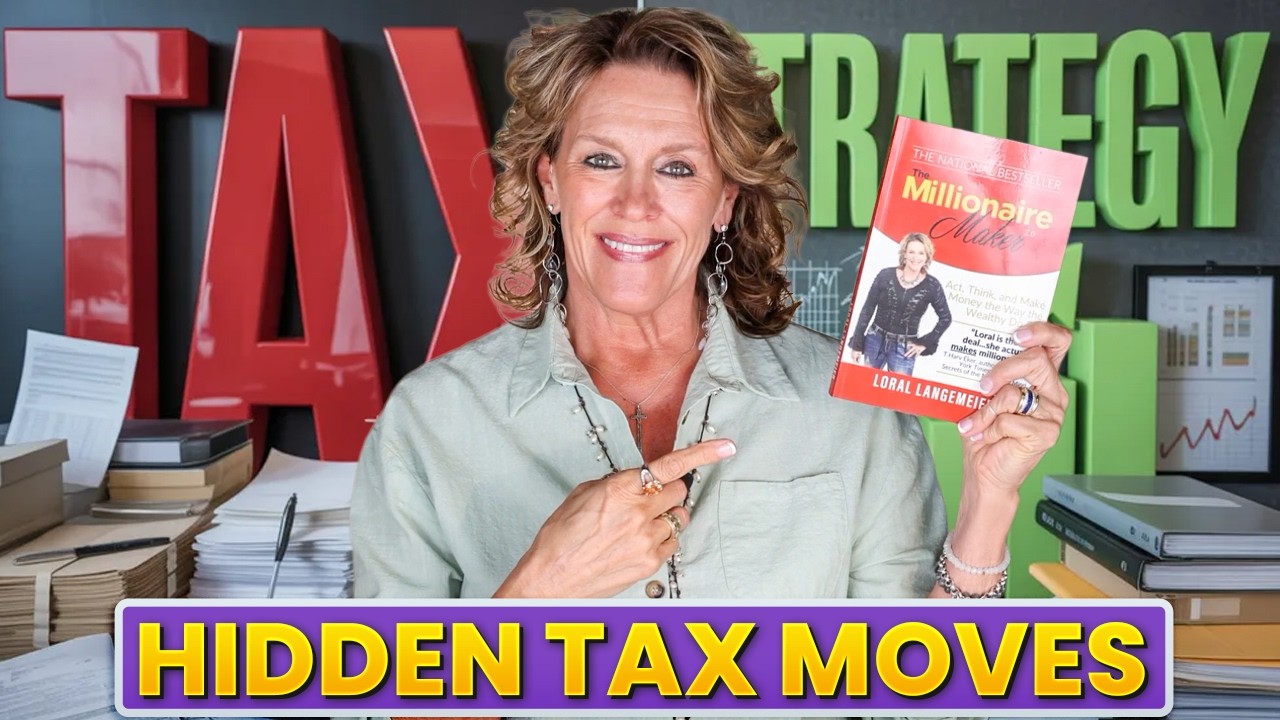
Most of you don’t have a tax planning strategy. You have a box.
You live your whole year, put all your behaviors and receipts metaphorically in that box, and hand it to a CPA, or try TurboTax yourself, or hand it to H&R Block, which is only for the babies.
If you want to grow up and become a millionaire, you need a tax plan, and you pay for it.
What Is a Tax Planning Strategy?
A tax planning strategy is a written, proactive plan designed to reduce your tax liability through the legal tools the tax code actually provides. We’re talking 81,000 to 83,000 pages of code, and most people never touch a fraction of it.
July 4th, 2025, was the best day in years for anyone wanting to be a millionaire, or anyone already there, because of the Big Beautiful Bill. It attacked four big areas: estate planning, legacy planning, and a double bonus on real estate.
If you think about what it takes to become a three- to five-year millionaire, the assets that offer the best tax treatment are owning your own operating company and owning real estate. Gas and oil, aviation, mineral, and water rights all fit in here, too. But across the history of wealth building, it’s business owners and real estate investors who pay the least tax.
I’m not telling employees to quit their jobs. You can run a Cash Machine alongside your job. The fastest one is to consult, to teach somebody what you already know. If you’re an engineer, you consult.
“Without a company, being employed is the worst kind of money possible.”
W-2 paycheck money means you make it, you get taxed, then you live on what’s left. A company, an S corp, LLC, C corp, or limited partnership, makes money, activates the tax code, and then pays tax. The order is the entire difference.
Why Does a Box Strategy Cost You So Much?
A real tax planning strategy is active engagement with a tax strategist, not a basic CPA who’s a historian, collecting your information and recording what you already did.
There’s a ticker running. At midnight on December 31st, whatever you did that year is locked. You don’t get to go back. A three-year review can catch a few things, but it can’t replace the strategy I’m talking about.
Would you rather overpay $12,000, $15,000, $30,000, $50,000, or $100,000 in tax? I had a client this morning who paid $1.7 million last year. Or would you rather pay $500 or $2,500 a quarter for a strategist who forecasts with you?
Run the math. For every $10,000 you overpay in taxes for 20 years, invested at 12.3%, you hand over $1.1 million to the government instead of your own future.
“For every $10,000 you overpay in tax for 20 years, invested at 12.3%, that’s $1.1 million you just gave to the government.”
If you’ve got a big W-2 income sitting next to a big 401(k) in the stock market, you have the worst of two evils. You’re taxed hardest on the income, and the 401(k) creates capital gains on top of it. You have a strategy to make money. You don’t have a strategy for the money once it’s made.
What Does a Good Tax Planning Strategy Look Like in Practice?
It starts with a structured plan from a tax strategist, and you meet at least quarterly. The more net worth you have, the more often you meet, monthly, even weekly if you’re buying and selling companies or real estate. I meet daily with mine during intense transactions.
This isn’t passive—every dollar you make, and every dollar you spend has a tax consequence attached to it.
I call it forecast forward. You sit down in January and February and say, I’m planning to make this much money this year. What investments do I need to make? What IRA contributions? Should I buy a car? Do I buy more real estate? Wealthy people pay tax in September and October, not in a scramble every April.
If you double your income by summer, that conversation changes. You might need a new corporation. You might need to buy equipment or vehicles. It’s an active strategy all year, but you’re the one driving it.
At the level I work with at the big table, you might have four or five companies, four corporate credit scores plus your personal one, bank accounts, and credit cards across every entity, and an active plan for which company pays for your phone, your vehicle, and even which company employs your kids. That’s not something you decide on your own without experience. It’s built with a strategist.
Start Today
- Stop handing your CPA a box once a year. Ask if they can forecast with you, or find someone who can.
- Run your own number: what did you overpay last year, and what would that be worth invested at 12.3% for 20 years?
- If you don’t have a company yet, find the skill you could consult on this week.
- Set a quarterly meeting on the calendar now, before the year runs ahead of you.
Want to build the actual entity structure behind this strategy? Get your seat at the Millionaire Intensive here: Millionaire Intensive
The Close
Be right and be poor, or stop overpaying tax. Good luck with the first one.
Go to AskLoral.com Ask a question, make a request. We’ll be back tomorrow.